Facilitators
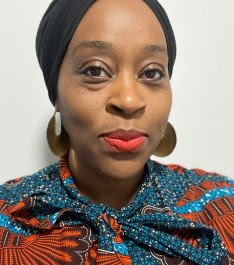
Co-PI Su'ad Abdul Khabeer, Associate Professor of American Culture and Arab and Muslim American Studies at the University of Michigan, is an anthropologist and a scholar of race and Blackness, religion, and popular culture. In her most recent work, Umi's Archive, she works with Black feminist scholarship to examine the archives and epistemologies of everyday Black Muslim women. Umi's Archive is a multimedia interdisciplinary research project that takes up the life of one woman, Amina Amatul Haqq (1950-2017), née Audrey Weeks, Su'ad's umi (mother), to open generative space for the investigation of key themes in the global Africana experience. The first iteration of the project was a series of expository and interpretive exhibits that featured over 800 items dated from the 1930s through 2018. Su'ad's first book, Muslim Cool: Race, Religion and Hip Hop in the United States (New York University Press 2016), is a critically acclaimed ethnography on Islam and hip hop. It examines how intersecting ideas of Muslimness and Blackness challenge and reproduce the meanings of race in the US. Su'ad's written work on Muslim Cool is accompanied by her one-woman performance ethnography, “Sampled: Beats of Muslim Life,” which presents her research to diverse audiences as part of her commitment to public scholarship. In line with this commitment, Su'ad leads Sapelo Square: An Online Resource on Black Muslims in the United States and has written widely and been featured in publications such as the Washington Post and the Atlantic. Su'ad is a 2019 recipient of the Soros Equality Fellowship.
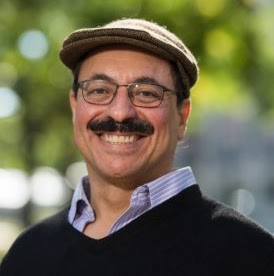
Co-PI Samer Ali is currently an independent scholar of Arabic and Islamic culture, based in Austin, TX, and formerly taught at Free University in Berlin, University of Texas at Austin, and the University of Michigan. Dr. Ali authored Arabic Literary Salons in the Islamic Middle Ages: Poetry, Public Performance, and the Presentation of the Past (Notre Dame Press) and writes and lectures on the history of Arabic and Islamic arts and humanities, as well as the effect of white supremacy’s legacy on how we currently understand the Middle East past and present. His award-winning research advances Middle East studies by centering the voice of the artist from Grenada to Baghdad. His work has appeared in the Encyclopedia of Islam (THREE), Journal of Arabic and Islamic Studies, Al-Qantara, Journal of Arabic Literature, The Oxford Encyclopedia of Islam and Women, and The Oxford Handbook on Islam and Women. Over the years, he received $4.1 million in awards from a mix of public and private institutions, including the American Institute of Maghreb Studies, The Institute for Advanced Studies in Berlin, and the US Department of Education, as well as five Fulbright Awards to conduct research in Egypt, Morocco, Kuwait, Germany, and Spain.
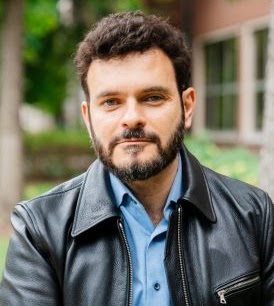
Associate Professor of Political Theory at the University of Michigan. He is writing a book titled, Islam under Modernity: Genealogies of Definition, Reform, and Jihad. This project is framed around three recurrent tropes about Islam in language, history, and politics, as windows into its relationship to modernity. The project is divided between the genealogies of modern racialized constructions of Islam and the counter-histories of the ideas that implicate Islam in the definition of modernity. Recent articles from this project include an overview in History of the Present (2021), a retrieval of Islamic anticolonialism forthcoming in Critical Times (2022), a disciplinary reconstruction of John Rawls's writings on Islam in Modern Intellectual History (2021), and an award-winning article titled “The Kazanistan Papers” on Rawls's racializedconstruction of Muslims in Perspectives on Politics (2021). His first book, War for Peace: Genealogies of a Violent Ideal in Western and Islamic Thought (Oxford U Press, 2019), won three best book awards. It examines idealizations of “peace” across canonical works of ancient and modern political thought, from Plato to Immanuel Kant and Sayyid Qutb. Murad argues that the dominant, moralized ideal of peace sanitizes violence, reinscribes global hierarchy, and facilitates hostility. He co-edited The Oxford Handbook of Comparative Political Theory (2020), which compiles articles to establish comparative political theory's guiding principles and future direction.He has held fellowships at the Institute for Advanced Study in Princeton, NJ, Columbia University's Society of Fellows in the Humanities, and Cornell University's Department of Government, among others. Co-PI Murad Idris is Associate Professor of Political Theory in the Department of Political Science at the University of Michigan. His book, War for Peace: Genealogies of a Violent Ideal in Western and Islamic Thought (Oxford, 2019), examines how philosophers from Plato to Immanuel Kant and Sayyid Qutb fantasize about “peace” in order to promote hierarchy, war, and repression. The book won the David Easton Award from APSA, the International Ethics Best Book Award from ISA, and the Best Book in Interdisciplinary Studies Award also from ISA. He co-edited The Oxford Handbook of Comparative Political Theory (Oxford, 2020) and co-authored Political Theory: A Global and Comparative Introduction (SAGE, 2025). He has written articles on “Kazanistan” in John Rawls's Papers, the politics of comparison in political theory, Erasmus's political theology, Ibn Tufayl's reception history, Qasim Amin and empire, and the horizons of anticolonial thought. His work has appeared in ,Perspectives on Politics, Modern Intellectual History, European Journal of Political Theory, History of the Present, Political Theory, among others. He previously held fellowships or positions at Cornell University, Columbia University, Harvard University, the University of Virginia, the Institute for Advanced Study in Princeton, and the Wissenschaftskolleg zu Berlin.
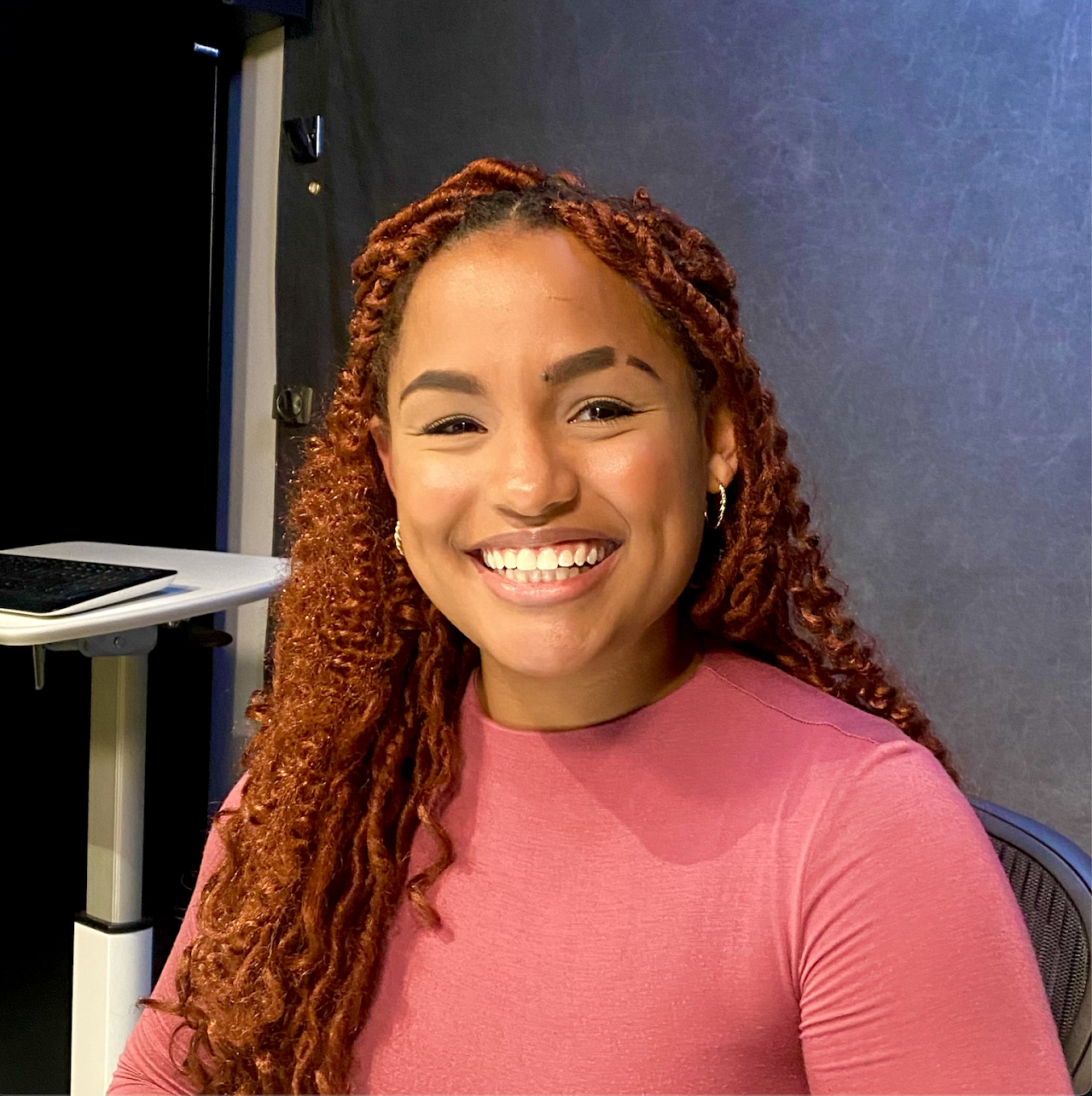
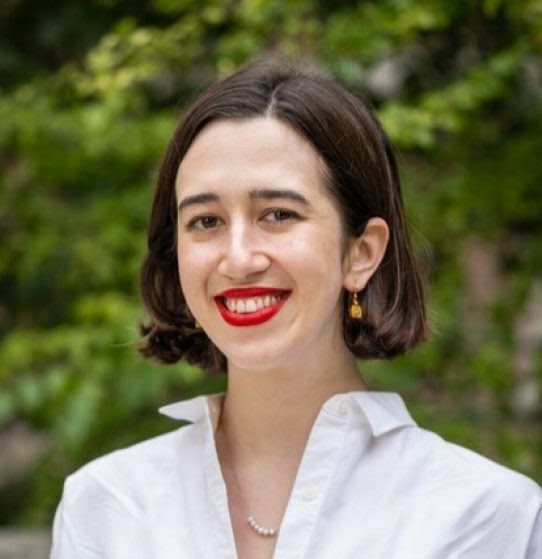
Iman AbdoulKarim is a Predoctoral Fellow with the Africana Muslim and Genealogies of White Supremacy Mellon Sawyer Seminar and a PhD candidate in African American Studies and Religious Studies at Yale University. She is currently working on her dissertation, tentatively titled Knowing Otherwise, an intellectual history of twentieth-century Black Muslima thinkers who drew on spiritual intellectualism and Black nationalist visions to reimagine U.S. Black life.